Writing about people

Best practices
The goal of all UX content is to be understandable to all — not just to the people paying for something or for those in a certain industry — and to accommodate the many ways that people use products. When creating content for product experiences, think and write by centering the person you’re writing to or about in a way that’s compassionate, inclusive, and respectful. Work to grasp the perspective of underrepresented groups, and avoid writing in a way that may view or treat someone as intrinsically different from yourself. You can use methods like co-designing and UX research.
Keep the following best practices in mind when writing:
Use neutral, precise, relevant descriptions
Only include personal qualities if they’re relevant and important. Write what you mean, then look back at what you wrote and think about whom you’re centering with your words. Doing this can reveal which people you’re leaving out. What’s the sentiment behind your words?
Choose words carefully and understand historical significance
Be cautious of appropriating terms from marginalized communities. In this guide, we say “underrepresented groups.” You can also reference 3rd-party sources such as Wikipedia’s list of which words to use and which to avoid.
Be clear and avoid stereotypes
Be on the lookout for proxy questions and statements, which appeal to generalizations and stereotypes. For example, saying, “just buy more storage” is a proxy statement on economic status, while “view additional storage options” doesn’t make those assumptions. Communicate from a place of equality, not condescension, and think about the worst-case interpretation of your words. Clear intent excludes fewer people and reduces bias.
Account for machine learning and AI
When collecting user data in app or web experiences, first think about whether that information is actually needed, and then if it really is, communicate why. Allow for both common and custom responses, self-identification, multiple selections, and the option to opt out of responding. Artificial intelligence learns only from the information we provide to it, so our inherent biases can easily become included in training data. If content allows for variable and AI-provided information, consider the ways that may affect any copy.
Writing about disability
Use neutral, precise, relevant descriptions
Person-first language centers the person, not their qualities, by using those qualities as modifiers: “Design Adobe apps for people who use assistive technology.” But for identity-first language, which some communities and individuals prefer instead, language highlights the disability: “Design Adobe apps for deaf people.” No group unilaterally chooses one over the other, so when you’re writing about someone, ask them how they want to be identified. Avoid euphemisms like “differently abled,” which are regarded as condescending, and descriptors used as nouns, like “the disabled” or “the blind.” These tend to present a group of individuals as a monolith and suggests a lack of individual diversity within the group.
Be clear and avoid stereotypes
With imagery and language, avoid implying that a person has to look a certain way, be a certain size, or have a certain cognitive ability to do something. Depict more types of people as typical.
Avoid appropriating terms from underrepresented groups
Be aware of how words that are often associated with physical and mental health are often used as metaphors to describe interactions and product functionality.

Account for machine learning and AI
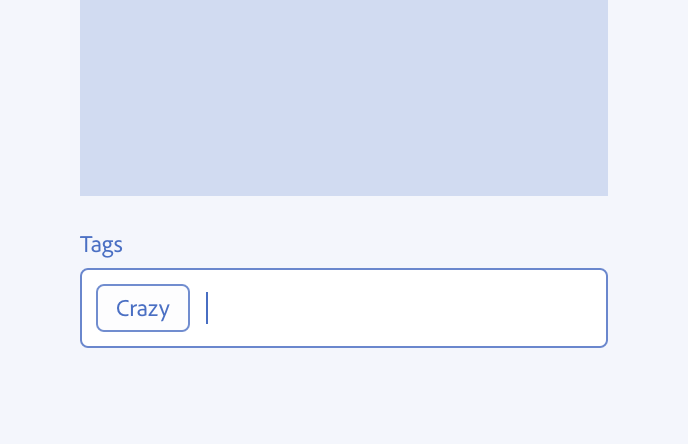
Enter metadata with caution. For example, don’t tag a photograph of a child with words like “crazy” or “weird.”
Writing about race and class
Use neutral, precise, relevant descriptions
Let’s say you’re writing a persona. When describing a person's country of origin or race, be as descriptive as possible as to not generalize any race or ethnicity. Race is only pertinent to biographical and announcement-related content that involves significant, groundbreaking, or historical events. For capitalization, Adobe follows AP Stylebook guidelines: capitalize nationalities, peoples, races (all except white), and tribes.
Choose words carefully and understand historical significance
Adobe avoids using software terms such as “whitelist,” “blacklist,” “master,” and “slave.” Don’t use terms assigning value to racial characteristics, such as “dark pattern.” (Terms like "dark mode," "light theme," or "black screen" literally refer to color and brightness and don't assign good or bad values, so continue using them.)

(Result in past participle form) (object)
Examples: Shared domains, approved people, targeted sites
For coding constructs:
Allowlist
(Result in past participle form) (object)
For coding constructs:
Blocklist
Be clear and avoid stereotypes
If you want to use a certain idiomatic or casual phrase, research its history before doing so. For example, imperfect spellings or pronunciations of words can imply pejorative associations with an accent. Be on the lookout for proxy questions, such as relating postal codes to ethnicity in rejecting job candidates, or making pricing or marketing decisions based on the average income of postal codes.
Use plain language
Since English isn’t everyone’s first language, it’s best to write using clear, plain language — as well as avoid idioms and phrases that might be complicated for non-English speakers to understand. Plain language is more widely understood and, therefore, avoids alienating people. It especially avoids alienating people in ways that specifically belittle non-English speakers. For example, the conversational and casual phrases “long time no see” and “no can do” were originally used to belittle Native Americans.

Depict more types of people as typical
We must focus on building successful experiences for all users. That means writing and designing in a way that depicts all skin types, names, and cultures as typical. We cannot keep centering white-skinned, Western cultures in our designs.
Be cautious of appropriating terms from underrepresented groups
Here’s a list of preferred words that are alternatives to common technology industry jargon.


Writing about gender and sexuality
Be clear and avoid gendered language and stereotypes
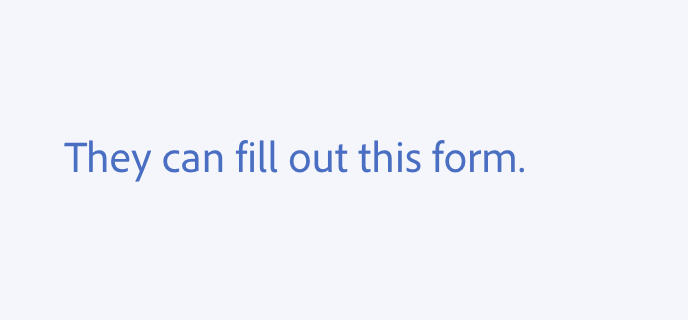
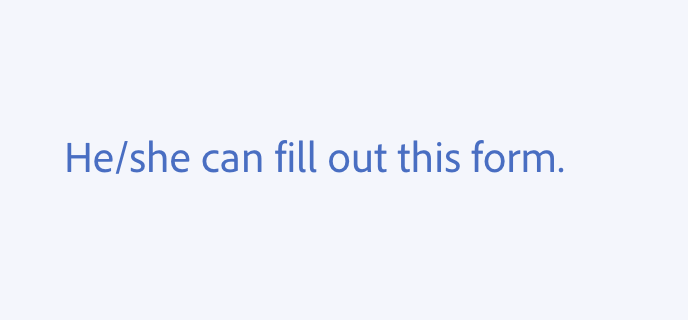
Rather than “he” or “she,” if you don’t know a person’s pronouns, make the phrase plural and use “they” instead. Use of “they” to describe one person is also accepted, although the syntax remains plural (e.g., “they are” = “that person is”). It’s also best to avoid using roles or stereotypes that have gendered roots (e.g., “businessman" or “waitress”).
Choose words carefully and understand historical significance
Use gender and sexuality descriptors as modifiers, not nouns (e.g., “transgender woman” rather than “a transgender,” “bisexual person” rather than “a bisexual”). A person’s pronouns are not opinion or preference, even if they may change over time (view Spectrum’s guidelines on pronouns). All of this helps us emphasize every person’s humanity, and keeps us from alienating people who aren’t cisgender and heterosexual.
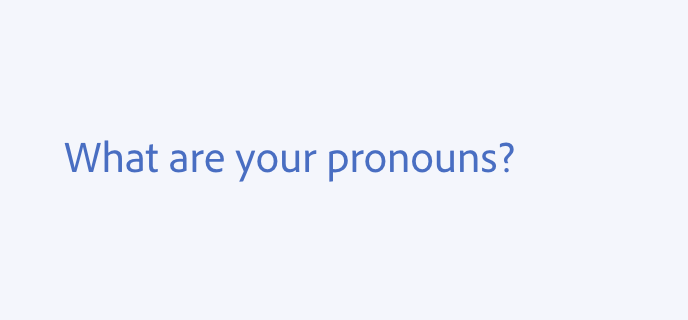
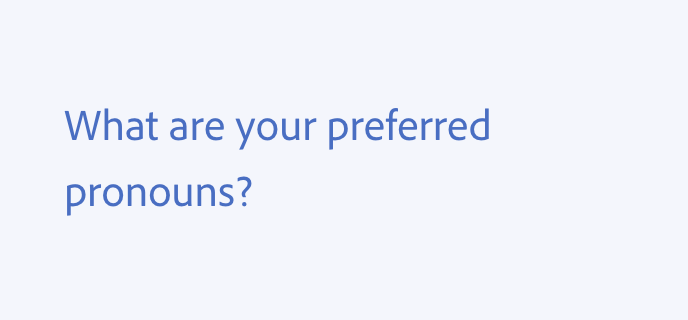
Be specific and kind
Know the difference between sex (male/female) and gender (man/woman). When collecting personal data from users, consider if it is really necessary to ask for a person’s gender. Data collection and forms, while useful to product builders, can feel intrusive when asking about gender. When you really do need the information, allow for both common and custom responses, self-identification, multiple selections, and the option to opt out of responding. Avoid asking proxy questions, for example, asking for someone’s gender when the information that is actually needed is their bike size.
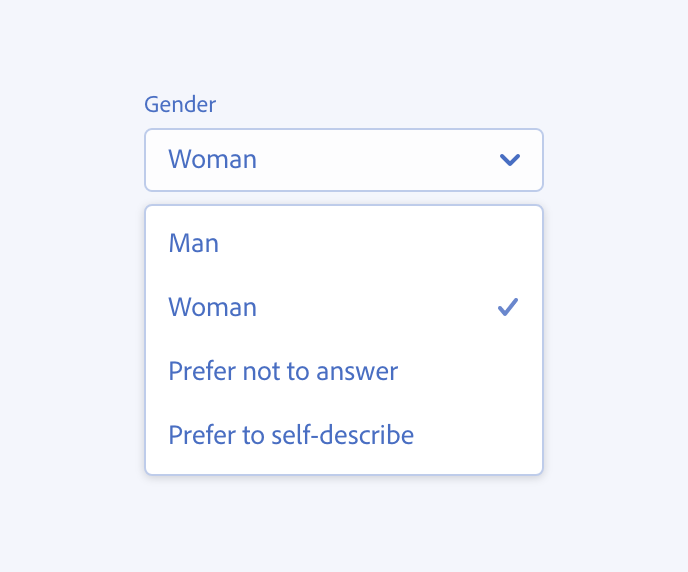
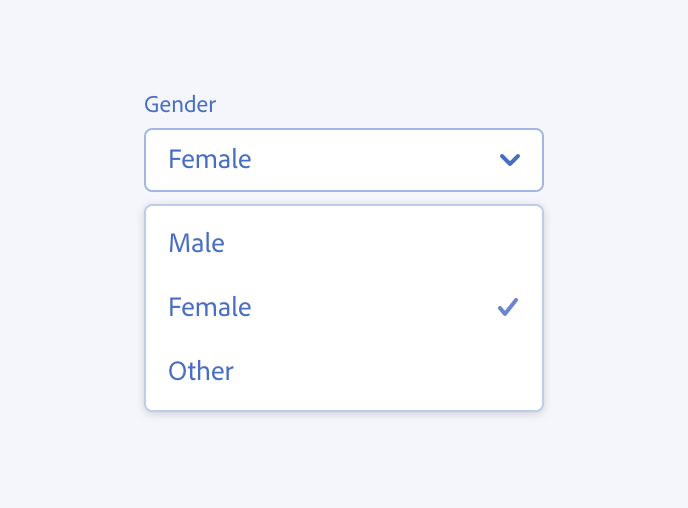
Account for machine learning and AI
People globally identify with many genders and sexualities, so it's important to teach AI exactly that. It wasn’t until June 2018 that the World Health Organization (WHO) declassified being transgender as a mental illness, so even though humans have adjusted this perspective, machine learning and AI can still perpetuate these biases. Don’t use AI or machine learning to guess genders based on image recognition, text analysis, or anything else.